Thursday, 10 April 2014

LesmoThoughts: Burnout Revenge


I'm basically cool with the Burnout games so I'm not going to rag on them too much. Granted I've only played 3, Revenge and Legends (on the PSP ("Perssspee")) and neither of the first two which were apparently actually about racing WITHOUT psychotically ramming other racers off the road. Looking back EA probably had some uncharacteristic balls to make the decision to turn Burnout into that sort of game, and based on the three entries I've played and stuff I've heard about the ones I haven't I'm just going to conclude that Burnout 3 is the best in the series.

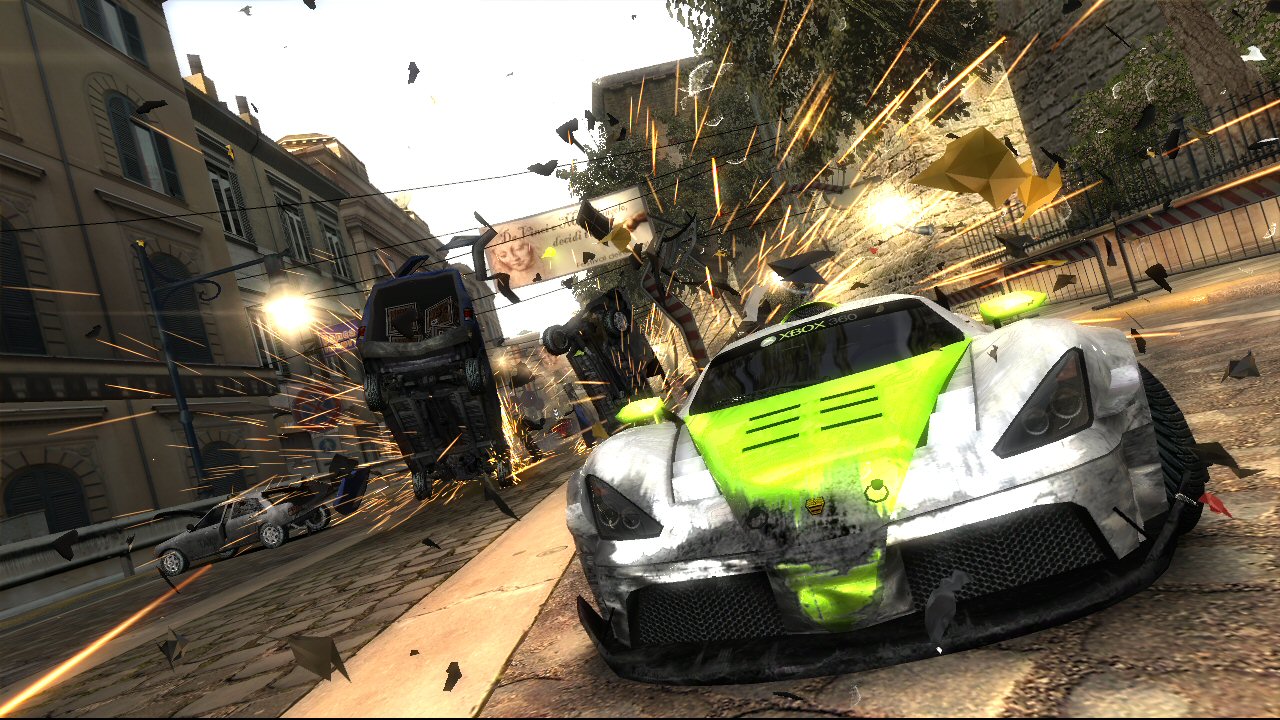
Not that Burnout Revenge isn't still pretty good! It's got most of the things that made Burnout 3 pretty darn fun and adds a bunch of extra stuff as well, granted most of the extra stuff just makes it muddier (if there's a thesaurus near you, be sure to add "dumber" to the words listed under "muddier". Incidentally, if you feel the need to have a thesaurus near you at all times, perhaps you should consider reading more regularly). Probably the new addition that stands out the most is "traffic checking", and jerks are probably scoffing at me bringing that up before the "Revenge" mechanic that's mentioned in the title, and to those jerks I say that's just a gimmick and doesn't matter and you have a stupid haircut. Anyway, "traffic checking" means you can just wail into the back of non-oncoming traffic now, and in Burnout fashion doing so will earn you boost and points and feelings of "heck yea", especially when you score a trick shot by pounding a Ford Fiesta into a school bus full of children or something.

This one subtle change probably sounds pretty cool on paper, but actually it kind of takes a lot of things out of the Burnout formula that changes it for the worst. First off, the roads are less dangerous now...that sucks. Second of all, why can your car slam a truck into the sun Team Rocket style when you hit it from behind at no risk, but hitting oncoming traffic wipes you out instantly? Also, why does getting slightly nudged into the same traffic also force you to crash when the game demonstrates I can plough through non-racer vehicles like they're your mum? There's also this weird little scratch at my psychology, where the game now awards you with boost for BOTH driving on the wrong side of the road AND ploughing through traffic on the right side of the road (if you've still got that thesaurus handy, this is "right" as in "correct" and not "opposite of left". But due to this game being set in America it's actually both anyway so I don't know why I brought it up, just pretend these brackets aren't here). You know awarding me for "driving dangerously" has more appeal when it's actually kind of possible to drive "safely" in the first place.

And FINE I'll mention the Revenge thing briefly. I could see the appeal in a multiplayer setting I guess; wanting the game to keep track of which of your douchebag friends is slamming you into street signs the most and awarding you for getting them back within the context of the game rather than flushing their head down the toilet. It's kind of dumb in the single player mode though, especially as when a race ends the game reveals the extraordinary personalities you were competing against this entire time go by the title of "DRIVER1", "DRIVER2", "DRIVER3", "DRIVER4" and "DRIVER5". There's only so mad I can get at a faceless PS2 era modelled car, at least let me name all of the drivers myself like in MOTHER 3, or come up with your own Wacky Racer style personalities so I can at least imagine some guy shaking his fist at me in his mangled wreckage.

Enough of that, let's not pretend this is actually some kind of game review and talk about the actual worst thing of Burnout Revenge, and that's the soundtrack.

NO. DO NOT COMMENT AT ME THAT THE SOUNDTRACK IS AWESOME AND I'M JUST A JERK.

Even if it was good music, I can't imagine anything lazier than licensing a bunch of wabbily mid-2000s pop-rock gosh darn GARBAGE for the soundtrack of a racing game. Especially a racing game that has a focus on ridiculous speed and doing that effect where the audio gets drowned out anyway. Burnout 3's soundtrack wasn't good either but I could tolerate it, I mean I'd rather get woken up by two falcons pulling me out of bed by the ears than set anything on that soundtrack as my morning alarm song, but it didn't offend me to hear it during the background of a high speed racing game I guess.

It's not that big of a deal really I suppose, but it's a shame that a genuinely great little series has chose to date itself so horribly with this decision. You could have come up with some original music to give your game it's own little personality, but instead I'm forced to either play the game with no music (which also kind of sucks) or endure your custom soundtrack that you have thoroughly stapled into the game forever. There's two points to writing this piece, 1) that (entirely) licensed soundtracks are super lame and really lazy, Burnout Revenge is just the worst example to me because they filled it completely with the sort of music I despise personally and 2) that EA can't quite release anything without ruining it at least slightly.

So there you go; Burnout's great, Burnout Revenge is pretty good, EA sucks goomba balls. The end.

Saturday, 5 April 2014

LesmoThoughts - American McGee's Alice


There's going to be some non-linear storytelling going on here, let's start in the Summer of 2011 where I made a day one purchase on Alice: Madness Returns for thirty-eight dot ninety-nine British pounds. I played that game until I beat it, and it sure wasn't that great, it was a basically competent but dull 3D platformer that stretched 4 hours of ideas out to about 15. It was one of those games where word got around quick that it wasn't that great and it irritatingly slashed in price mere weeks later, which I was rather butthurt about. I held onto my copy because I needed it to play the free HD version of the original American McGee's Alice which I figured I might someday.

Flashback to the beginning of 2011 and I see screenshots for the first time of Madness Returns, it looked kind of cool and seemed to have some kind of creative spark behind it somewhere, which was somewhat uncharacteristic with it being an EA game and all. I'm not sure if they had stopped calling themselves "Electronic Arts" at that point, that was probably a smart decision to prevent GENIUS puns like "Electronic Arrrrrrrrrrrrrrrrr...en't you wishing you chose another game right about now?" etcetera . Well it turned out this Batman Returns thing was a sequel to some old PC game I'd never played, because it came out in 2000 and in 2000 I was too busy hitting my chunky desktop computer with a chair to make it run Lego Island (and later Lego Alpha Team). 

Well in 2011 I got on the gosh darn internet and torrented the fudge out of that American McGee's Alice (I was a student so this is totally morally okay (I also did some carjacking on the side by dropkicked through the windows Dukes of Hazzard style (alright not really (wait let's just start this again, American McGee's Alice is an EA game so this is totally morally okay)))) and then I played that game until I beat it too. It wasn't that great either, but I was playing it with a keyboard whereas the new game was coming to consoles, and the biggest problem with it was god-awful combat and platforming which seemed to be the two big points of focus in the new one, so I was still vaguely interested.

Well a HD remake FOR CONSOLES of that 2000 PC game came bundled with Alice: Return of the Joker so three and a bit years later I thought I would give that a whirl and see how it holds up. And if I say right now that I'm writing this after only playing the game for about 10 minutes that's probably all I really need to say about it. I'll say more anyway; and this might come off as harsh; this game kind of actually fucking disgusts me. Without resorting to really dumb choices like Action 52 or something I honestly can't think of a game that has a worse jump or worse combat.

The jump is ridiculous because Alice jumps so insanely high that it seems to take the camera by surprise every single time, but is still problematic because the level design is so stretched out that it still doesn't feel like she jumps high enough. Not to mention every single time she jumps she makes one (and only one) grunting sound that sounds like she's being sexually assaulted in a wind tunnel. In trying to figure out how to skip them (lol) I hit the jump button during a non-interactive cutscene and the game glitched and started playing the jump grunt over and over again, you could probably play some of the Cheshire Cat's lines over that and make a pretty sweet remix.

EVERY ADVENTURE REQUIRES A SINGLE STEP, TR-TR-TR-TR-TR-TR-TR-ITE BUT *BAP BAP BAP BAP* TR-TR-TR-TR-RUEEEE~~~ *UH UH UH UH*

I don't think even the people who like this game can defend the combat, I'm down with making the default "free to use" weapon kind of rubbish and a last resort kind of deal, but that's only really good design when you make the other weapons worth a damn. Not to mention the default knife strike is a tiny little slash that you can barely see as the camera is always positioned directly behind you like God Hand (no wait! Not like God Hand at all, oh God Hand I'm so sorry I compared American McGee's Alice to you that is so not cool) so telling when your utterly useless weapon is actually connecting is a challenge in itself. I could make some joke about the deck of cards feeling like throwing soggy cornflakes (and I just did) but just thinking about this game is depressing me.

There's something misguided and slightly pretentious about the entire project, making Alice in Wonderland (which is one of the handful of novels I can actually claim to have read! Boy, I can't tell you a lot about books, but I can sure say that Alice in Wonderland is better than Great Expectations and George's Marvellous Medicine) all depressing and screwed up only makes it less interesting to me. I don't really see the appeal of making the inhabitants of Wonderland all depressed and bi-polar when their M.O. is usually to just be kind of insane. But hey, both the Alice games have some interesting ideas and visuals in them, so I won't knock it too hard I guess, but for my money neither of these games are truly as demented as the original source material.

Thinking about this I realise I have a stronger connection to the Alice games that will probably/possibly make me hate them forever. When I originally beat this game back in the early 2011 days I sure did post on social media about how it was kind of sucky but also sort of cool and I was looking forward to playing the new one, a girl who I really liked but didn't know especially well at that time revealed herself to be a pretty huge fan of these games. Man, that felt like destiny at the time, and was in no way merely two near-identically aged people being intrigued by a totally mainstream product pushed out by one of the largest entertainment companies in the world and experiencing a slight overlap in interests (Disclaimer: I never have actually believed in "destiny", I also tie my own shoelaces and butter my own toast).

Many months later the lady in question actually met American McGee at some book signing event or something, and she came away disappointed because he was just a "normal guy" and not some psycho-weirdo guy. I don't really know what she was expecting, maybe that he would slit her arm open with his nametag and sample some blood for "the collection", but the EA development system probably beats any kind of weirdness (or personality) out of you eventually so I wouldn't hold it against him. But still, that's pretty god-damn hilarious, I can't help but slightly love someone for being disappointed in someone else for not being enough of a weirdo. These two bitter-sweet memories (the full story will have to be saved for another day (i.e NEVER)) hit me whenever I think about the Alice games, even if it's just seeing Alice: The Killing Joke on my games shelf, maybe that'll stop me from ever appreciating the little nuggets of good that exist within them.

I don't feel bad about it though because they're still rubbish...OOOHHHHHHHHHHHH

Friday, 4 April 2014

The Future Of Videogame Controls


It's been a weird decade in terms of how we interact with our videogames. There's always been a market for weird peripherals and gimmicky additions to our home consoles, but in the olden days the policy was basically "quick, add some more buttons to that!" Looking at controller designs from the Atari 2600 up to the PlayStation 2 the general formula was "take the old, add a few buttons to it or at the very least move them around." Probably the most embarrassing example of this was the Sega Mega Drive/Genesis, whose grand plan was to take the NES controller and stick another button on the end with no consideration of the human being using it who perhaps maybe would want to have easy access to both the A and C buttons. But hey it was a good idea I guess, 3 is definitely a bigger number than 2 after all.

Now we're the point where our controllers have a D-Pad, two analog sticks (that can also be buttons) and 11 other buttons to play with, they're also all in places that experienced gamers are generally okay with. However, for someone who isn't already on board the videogame train to Funtown a PlayStation 2 controller is probably as confusing as a Rubik's cube with 16 different colours. So it was clear the button-orientated arms race wasn't  going to get us anywhere further .This is when Nintendo came out with the DS and Wii in two consecutive years, both were commercially successful, and from a game design point of view one of them was a really good idea and the other was a not that great an idea. Soon followed iPhone/smartphone games, Kinect, PlayStation Move and now everyone's talking about VR.

The point of those first two paragraphs is for the longest time in gaming, the assumption has been that to change how videogame controls work you have to physically change the controller or the method in which the player interacts with the game in the first place. Well, a heck of a gosh darn lot of that has been happening in recent years and results have been pretty mixed, so trying to think of the next "revolutionary controller" may be a flawed concept.

Well, for those that don't know or found this little rambling through some other means, this is part of Critical Distance's Blogs of the Round Table, and the topic of discussion for this month is "How do we move forward with controls in games?" Well since I'm British, I'm going to change that to "How do we move forwards with controls in games" because some people say that here, and because I'm a negative jerk I'm going to go through three ways in which we DON'T go forwards with videogame controls:

1. - ADDING MORE BUTTONS

We've pretty much hit our threshold on how many buttons a videogame controller can have. The only counter-argument to this I can think of is "well, most people have to learn how to use keyboards for typing and stuff!" Well sure, keyboards are kind of convoluted out of necessity, but still it takes years for the average person to get really good at typing, and even then how many tiny errors do all of us make every day whilst typing? Most videogames don't have the equivalent of a backspace key, so these tiny errors can be murder when trying to present an interactive experience.

Having said that, I don't think it's essential for game controllers to have less buttons either. Those trigger things they've added to the backs of controllers, those are pretty darn good for shooting I guess, and most platform fans probably don't want to see the face buttons on the front of the controller get hacked off either. I guess I should just write a little public service announcement for any developers that might be reading this (especially AAA ones) that you aren't obliged to use every single button on the controller. I'll concede that it's necessary in some games, but if you are seriously applying a core part of your game to the L3 button you might need to either re-evaluate your design document or at least move the open can of industrial paint away from your desk.

Basic point here: controls should be streamlined as much as possible.

2. - MOTION CONTROLS

Well of course we were going to get back to the Nintendo Wii, which other than gimmicks and party games didn't have a lot worth a damn released for it despite its massive success. Motion controls definitely have their place in the gaming stratosphere, but I'm sure most people have given up them as a potential "next big step" sort of project.

(Most) Videogames have to engage the player emotionally and/or mentally, and both of those things are things that happen inside your brain and not to your body. The key is to make the time between videogame > player's brain > back to videogame as minimal as possible, and preferably instantaneous. Having to perform larger physical motions (which no physical feedback so they can't possibly emulate what is actually happening on the screen) only extends this time and draws you further out of the experience. This same kind of dissonance between input and action is why online games with poor netcodes (i.e. a lot of them) are so ungodly frustrating. I genuinely don't think there's a more depressing feeling within the context of videogames than failing because your button press came out 0.8 second later than it should of. Online games can possibly fix this entirely someday, motion controls can not.

Also, people generally don't do star jumps while watching a movie or reading a book, probably because it's really distracting for the former and physically impossible for the latter.  

(this is slightly off the topic at hand, but you can read me further discuss the issues of physical input in regards to videogames by reading my "Why Mashing Buttons is Stupid" piece on GameGrin)

3. - VIRTUAL REALITY

A ha! I'm done playing Captain Hindsight on the past and now I'm laying my balls right on the table ready to take several knocks at the future! Okay, same point again, Virtual Reality is a great idea (not just for games though, it's kind of super weird that so many people only see VR as a gaming device when it has many other interesting applications) but it's not something I can honestly attest to being the next step of gaming technology.

I could just be a jerk again and point out that people generally don't seem to take to things that have to be strapped to their heads, they don't even really like having to wear funny glasses for 3D movies. But I'll turn the jerkiness on myself and also point out that a lot of people like to listen to music with sweet big-ass headphones so that's probably a hurdle it could overcome.

The main problem I can see with VR is that it's overwhelmingly antisocial. I can't picture a world where two or more people would sit around in a living room all with these things strapped on, nor would you let other people "watch" you play it. You can argue that its strengths would be in single player games anyway, but a single player game that you're basically forced to play alone is not going to be the new hotness. Videogames have become highly social and are not something near-exclusively played by little kids and closeted nerds any more, so any advance in the technology needs to acknowledge that.

Again, none of these things mean VR will be a failure (and I would predict that it almost definitely won't be a failure) but there are inherent design issues with it that limit its appeal to a mainstream entertainment audience. Maybe someone a lot smarter than me will find a way around them and prove me wrong, and I would be down with that! But right now, consider VR as part of the future as opposed to the next big step.

THE FUTURE

So what is the FUTURE OF VIDEOGAME CONTROLS? Well I don't know, but let's be honest the entire industry would look pretty ridiculous if a website called "Lesmocon.com" cracked the secret.

One thing that my mind keeps coming back to is the connection between the player and the screen. In a way, it's unfortunate and somewhat unnatural that we have to press anything, I think it's in the interest of videogames for them to make themselves as intuitive as possible, maybe even to the point where it's easy to forget there's a controller there at all.

Games are almost there in terms of movement (good ones are anyway), I've had some weird existential moments within games where without even trying I navigate a really difficult path in a platformer or something, and immediately afterwards my brain has this moment of "woah...how did I even just do that..." But in terms of extra actions there's some work to be done, this is another example of how button prompts and Quick Time Events are really bad design. When a videogame shows a message of "Press X to do this contextual action" within half a millisecond your brain processes "oh! Press X! Where's X on the controller? There's X on this controller! Now I'll press X on this controller!" See, the way I chose to write that there were three cases of the game forcing you to remember you're holding a controller, clearly I have proven my own point now.

I guess that's my answer then. You may argue I've somewhat dodged the question, but I'd argue that the industry has been dodging the question by constantly trying to change the hardware as a solution. Any human being can be taught how to use an analog stick, or how to tap the screen on a mobile device, now it's developers turn to design games in a way where people can pick up a controller and play it. It would be too much of a sweeping statement to say no games should have tutorials, but if you feel your game needs a tutorial to explain what every button does directly, with words on the screen and everything, maybe you should consider why that is and what you can do to change it.

So yea...we have enough buttons, we have enough controllers, we have enough technology, we probably don't have enough good games though, and logic would dictate that this isn't the controller's fault. The failure of the Wii U, rejection of the Xbox One forcing the Kinect upon its audience and the utter confusion in whatever the PlayStation 4's touchpad thing is are all evidence that gimmicky changes to how we interact with our games no longer impress anyone. You know what did impress a lot of people? Super Mario Bros., that's what.

There you go games industry, I did crack the secret after all! Just make a game as good as Super Mario Bros. and you're golden.

Thursday, 3 April 2014

LesmoThoughts - Solitaire


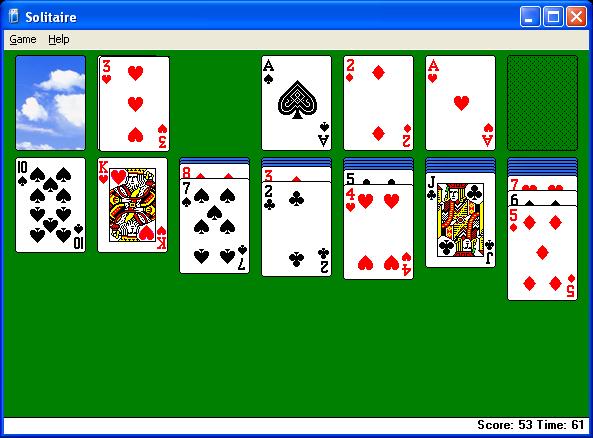
This is somewhat embarrassing, although pretty easy to admit in public due to the fact that I'd guess that this is also true for 4 out of 5 people reading this, but I think the videogame I've probably played the most in my life is Solitaire on Windows. What's even more bothersome is that by some people's crazy screwed up standards that fact alone might actually technically make it one of my favourite videogames of all time. Oo er.

Okay so maybe not really, I can say with 100% confidence that Solitaire isn't as good as Tetris for example, but it concerns me how much of a time-sink Solitaire still is. Some people swear to Minesweeper as their time murderer of choice, but I've never seen the appeal personally. Minesweeper is more like the videogame equivalent of knitting, something you just of chip away at while the telly's on, but you're knitting rubbish jumpers that only Octodad could wear because it's randomly generated wool, also the jumper occasionally explodes. Maybe this is just my super genius 182 IQ brain talking (Disclaimer: not really) but I find Minesweeper frustratingly easy apart from the bits where it's literally just guesswork, but then I just find it frustratingly bullshit instead.

Having said that, maybe no-one would like Minesweeper if it was difficult. It's different to games like Tetris because you can actually beat it, you can still have a good time with Tetris even if you suck at it. Since I am a human being, and we are silly little things, I regularly push the games on my shelf against the wall to make sure they're all lined up. I hate my copy of Dark Void for the reason, because it has a cardboard sleeve over the box that I don't have the heart to throw away, and that makes it stick out by 0.1 of a centimetre which infuriates me. My box of Dark Void also annoys me because it contains Dark Void. But the point is, Tetris plays to that bit of the human brain that just loves the feel of snapping things together, it's fun just to play around with even if you don't know what you're doing. Minesweeper plays to that bit in the human brain that makes you hoover the entire house because you forgot to bring a plate with you when you ate that sausage roll (you fat pig). It's about getting a board cleared as opposed to actual act of clearing it. Come to think of it, maybe the reason Minesweeper doesn't have that much appeal to me is because I don't find it difficult...so maybe it's just a game for mor..NO BAD PARAGRAPH TOO LONG ALREADY START ANEW.

Solitaire has to be some kind of conspiracy, it's possibly done more damage to the Western economy than the recession did just due to the amount of work hours it's devoured. What's scarier is the fact that it's not immediately obvious why it is so addicting, I don't know, and a brief Google search before writing this sentence implies that not many other people know either. At it's lowest level it's simple guesswork and anyone can beat it occasionally just by brute forcing it (unlike Minesweeper) while at its highest level it is gosh darn algebra. I read somewhere that every game of Solitaire is possible to win, I'm pretty sure that's not true as I've definitely had games load up where it was impossible to make a single move other than cycling through the deck once and the game would declare itself to be over, so there is still a big luck factor involved.

What we have is a game that's easy for anyone to play whether they understand the large amounts of probability related maths going on behind every session or not, that's available on the majority of the world's personal computers, they everyone seems to play but few have any explanation as to why. I do think the fact that it's just there is a huge part of this phenomenon as the game itself, and if Tetris had come packaged with every computer instead the civilised world would have certainly collapsed by now. God, did I just actually write that, maybe Microsoft were showing mercy on us all by choosing Solitaire as the packaged game for their software.

If I had to make a guess at the secret of the actual game's appeal, I think part of it is the "constant tiny decisions" aspect of it, whether to move a card now or have another go-around etc. combined with the bigger decisions, like when you have two cards of identical colour and number and you have to decide which will the best to move based on a little bit of maths (length of columns/amount of cards remaining in the deck) and a little bit of guesswork, mixed in with a little risk/reward of the entirely unnecessary scoring system that rewards you for beating the game in a certain way. These are the parts that make it a "game", but there's also the lack of load times and the cathartic nature of piling the cards on top of each other when you're on a roll, which feels the same whether you know what you're doing or not. However, my real answer to "why is Solitaire so addicting" is still a definite "dude, I dunno ask a psychologist lol".

My real concern is the fact that whether it's a good game or not (I'd argue that it probably is), a lot of people don't seem to enjoy Solitaire but the vast majority play it. There's something creepy about that, and it brings up the issue of games being "addicting". If you're a regular reader of videogame reviews you've probably been indoctrinated with the assumption that a game being "addicting" is a point in its favour, okay maybe that's a benefit to the actual game but not necessarily the user (insert anecdote of Starcraft players not feeding their babies here). Not to say that an addicting game is always a bad thing, but the term "addicting" needs some justification and can't be assumed as a compliment. In any other context "addiction" has connotations of bad health and bad habits, and I see no reason why videogames should get a free pass on that.

I'm not that sure whether Solitaire is a good videogame or not, but I know for a fact that it's a terrifying one.


Wednesday, 2 April 2014

LesmoThoughts - Ducktales Remastered


Hey you guys know Ducktales on the NES? That game's alright, I'm not sure if I'd call it a classic or rank it Number 10 on a "Best NES Games Ever" list like IGN did, but it's basically okay. You probably also know that those guys over at Wayforward made a remake of it last year and everyone loved it.

I didn't love it.

I wrote a "meh" review of it at the time, knowing full well it was a game I didn't especially enjoy but everyone else was all over. That's the weird thing about writing reviews, a strange little psychological current that you have to swim upstream against. Even if you're not writing a "publisher approved" review you're still going to look pretty gosh darn silly if everyone else in the world gave a game 8s and 9s and you're sitting on a solid 3. Of course, it would be even sillier to care about this, after all if everyone was truly subjective to their OWN opinions in videogame reviews this wouldn't be a problem in the first place. FIGHT THE SYSTEM.

Anyway, Ducktales Remastered, it sucks! A ha! Don't even have to be vaguely professional in this environment I love it. Okay let's be a little fairer, it's got that annoying aura to it that all WayForward games have where I really want to like it honest! They have Jake Kaufman on staff who is possibly my favourite composer working in videogames today, and he knocks it out of the park again with his remix of the original Ducktales NES soundtrack, and as ever the visuals are packed with colour and charm and I just want to gobble it all up. But here's two problems that almost every WayForward game (that I've played) has:

  1. Constant, unrelenting nostalgia-bating and intentionally archaic design.
  2. GOD AWFUL/non-existent level design
There's a bit in Ducktales Remastered that highlights both these problems at once, and I laughed out loud when it happened during my first time through this game. On the Amazon stage there's a bit where you navigate across some floating rocks with Launchpad flying above you on a helicopter, with a little rope dangling out the side for you to hold onto. I can't even explain how god damn ridiculous this looks, it's like 4 screens worth of seemingly randomly placed square blocks floating around in nothingness, some of them even have duck-eating carnivorous plants growing out of them for god's sake. Here's the thing, there is absolutely NO REASON to use the platforms to continue the level, you can just hold on to the rope and get carried to the next bit of the game. The only reason for the blocks is to drop down onto them, jump to the next one, a previously invisible and unattainable little gem will drop onto the last block and you jump back onto it to boost your high score.

THIS IS ACTUALLY A THING THAT IS IN A VIDEOGAME THAT WAS RELEASED IN 2013.

Why is this there? I can actually tell you right now, it's because it's a thing that's in the NES original game and WayForward didn't have the guts to take it out. And yea, that's right, I said THE GUTS, because either you were too afraid to "change a classic" or you were incapable of fighting your inherent nostalgia blindness to not see how absurdly RIDICULOUS this section is. When you put a ton of really great work into making the game look and sound amazing, you can't then also keep the NES "blocky" layout level design. Or I guess you can, but then you get Ducktales Remastered and a generally terrible videogame. 

Non-sequitur: What is even with the appearing treasure thing? It's like someone made a game entirely based around those stupid invisible coins in New Super Mario Bros that no-one liked.

The biggest issue with this game is the cutscenes thing that constantly interrupt the already incredibly short levels, which brings the game to a crashing halt every 20 seconds. It's god-damn-un-be-lee-va-bull, I actually got in an argument/debate/catfight with a couple of the WayForward developers during an Ask Us Anything thread they did on Reddit just after the game's release about this. One developer that didn't even work on the game told me he thought the design decision was "perfect", which terrified me, like this dude gets paid real world money to make videogames and he thinks Ducktales Remastered has PERFECT DESIGN. Another developer who actually did work on the game explained to me that they did consider having an option to skip the cutscenes, but there was some bug or something that stopped them from doing it.

And now they've patched it in! The patch was like 175mb though so it must have taken a lot of work to fix this gamebreaking issue. Unfortunately a lot of work went into the cutscenes and they kind of accidentally based the entire game around them, so you still have to play the game the terrible stupid way before you can unlock the option to turn the cutscenes off. But for the record, I played a bit of the game again without the cutscenes and it was a LOT better, mostly because the music stopped getting interrupted which is absolutely the best part of this game. Let's not forget though, WayForward made a concerted effort to keep Ducktales Remastered as pathetically retro as possible, then thought it would be really intelligent to constantly interrupt the game with terrible cutscenes where character sprites stand around and don't actually move their bills to talk to each other. Unbelievable.

Even without the cutscene thing I still don't like the game, the appearing gem thing is just annoying and pads the gameplay out. The game has a potentially great mechanic with the pogo cane thing, but the challenge comes from putting the player in narrow corridors and tall enemies so it just becomes frustrating. And it's really really short, and the bosses suck, and the hit detection is weird, and yadda yadda, this is just Tumblresque bitching now, I'll knock it off. 

More like SUCKtales Remastered, you know what I'm saying? (Jake Kaufman I love you btw)